

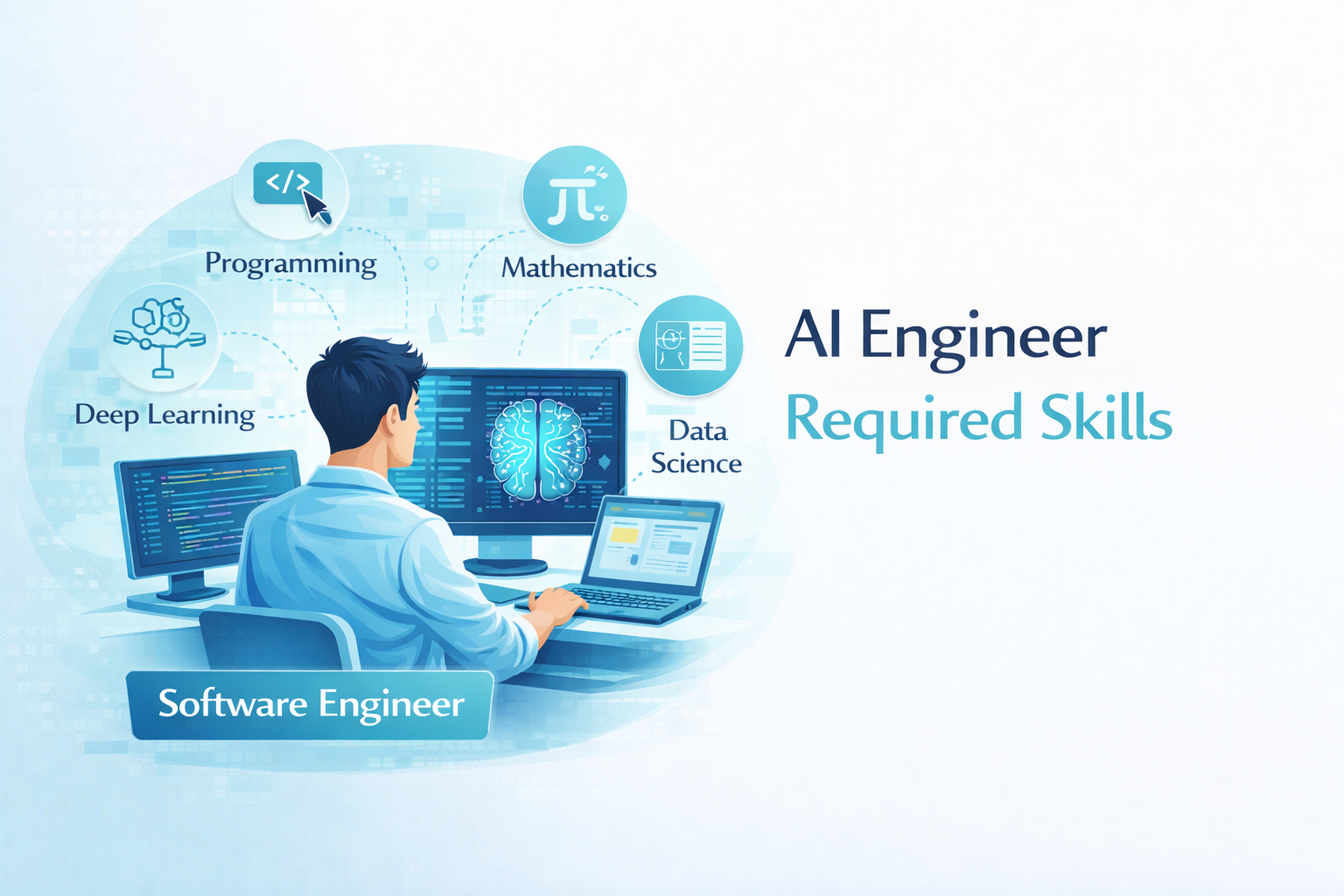

The field of artificial intelligence (AI) engineering is undergoing significant transformation. Once primarily a domain of specialized coders, the role now demands a broader range of abilities. This evolution reflects the increasing integration of AI into diverse industries and the complex nature of its applications. To succeed, AI engineers must move beyond purely technical skills and embrace creative problem-solving. This article explores the evolving landscape of AI engineering, highlighting the crucial interplay between coding and creativity. It outlines the essential skills aspiring and current AI engineers need to navigate this dynamic environment.
The initial phase of AI development focused heavily on foundational algorithms, data structures, and computational efficiency. Early AI engineers were often computer scientists or software developers who translated theoretical models into functional code. Their work involved optimizing algorithms, managing large datasets, and building robust software architectures. The emphasis was on making AI systems work, often within controlled environments.
As AI matured, its applications expanded. Machine learning, natural language processing, and computer vision became integral parts of various products and services. This expansion changed the demands placed on AI engineers. They transitioned from simply implementing models to designing systems that could interact meaningfully with the real world. This shift required a deeper understanding of user experience, domain-specific knowledge, and the nuances of human-computer interaction. The role began to encompass more than just lines of code; it started to involve understanding the purpose behind the code.
From Model Building to System Design
Initially, an AI engineer might have spent most of their time training models on pre-cleaned datasets. Today, the role extends to the entire lifecycle of an AI product. This includes scoping projects, understanding end-user needs, integrating AI components into larger systems, and ensuring ethical deployment. You, as an AI engineer, are no longer just a model builder; you are a system designer. This means considering how your AI solution fits into a broader ecosystem, much like a single gear in a complex machine. Each component must not only function independently but also contribute to the overall operation and efficiency of the system.
Designing an AI system often involves navigating trade-offs between performance, cost, scalability, and interpretability. These decisions are rarely purely technical; they require a blend of engineering acumen and strategic thinking. You might have to choose between a highly accurate but computationally intensive model and a less accurate but faster alternative, depending on the application’s real-time requirements.
Understanding the Broader Impact
Modern AI systems have far-reaching societal implications. An AI engineer today cannot operate in a vacuum, focusing solely on technical metrics. Ethical considerations, fairness, bias mitigation, and data privacy are paramount. You must consider how your AI system will affect individuals and communities. This demands a level of foresight and critical thinking that goes beyond debugging code. It’s akin to an architect not just drawing blueprints but also considering how a building will impact its environment and the people who inhabit it.
For instance, developing an AI for loan approvals requires not only maximizing predictive accuracy but also rigorously examining the model for biases based on protected characteristics. This calls for a nuanced understanding of social dynamics and a proactive approach to addressing potential harm.
Coding provides the structure and logic for AI systems. It is the language through which instructions are given. However, creativity is the spark that ignites innovation and allows for novel solutions to complex problems. The two are not mutually exclusive; they are complementary forces. Think of coding as the disciplined construction of a bridge, and creativity as the vision for where that bridge should go and what new paths it will open.
Where coding establishes the rules, creativity questions them, suggesting new approaches or entirely different frameworks. In AI, this often manifests in finding unconventional ways to represent data, designing insightful evaluation metrics, or conceptualizing entirely new AI architectures.
Problem-Solving Beyond Established Methods
Many challenges in AI do not have straightforward solutions. Pre-packaged algorithms might not fit the specific context, or available data might be imperfect. This is where creativity becomes essential. You, as an AI engineer, must be able to think laterally, drawing inspiration from different domains, and adapting existing techniques in innovative ways. This involves a willingness to experiment, to fail fast, and to iterate on ideas.
For example, when faced with a novel data type or a highly imbalanced dataset, a purely technical approach might lead to dead ends. A creative engineer might explore techniques from other fields, like signal processing or natural language processing, and adapt them to the current problem, forming a hybrid solution.
Data Understanding and Feature Engineering
Data is the lifeblood of AI. While coding skills are necessary to process and manipulate data, creativity is vital for understanding its nuances and extracting meaningful features. Often, the raw data does not directly contain the information needed for an AI model. Feature engineering, the process of transforming raw data into features that better represent the underlying problem, is a highly creative endeavor.
It involves deep domain knowledge, intuition, and the ability to hypothesize about hidden relationships within the data. You might consider combining multiple raw features, applying transformations, or even synthesizing entirely new features from existing ones. This is similar to a sculptor seeing possibilities within a raw block of stone, knowing how to chip away and refine to reveal a hidden form.
While a strong foundation in programming languages like Python, knowledge of AI frameworks (TensorFlow, PyTorch), and an understanding of algorithms are non-negotiable, the requirements extend further.
Analytical Thinking and Critical Evaluation
AI engineers constantly deal with complex data, models, and system interactions. Analytical thinking is crucial for breaking down problems into manageable components, identifying root causes of issues, and evaluating the effectiveness of different approaches. This involves a rigorous, evidence-based mindset. You must be able to critically assess research papers, understand the assumptions behind various models, and identify potential biases in data or algorithms.
When a model performs poorly, an analytical AI engineer does not just re-run the training process; they investigate data quality, hyperparameter choices, model architecture, and potential edge cases. This investigative mindset is key to effective problem-solving.
Communication and Collaboration
AI projects are rarely solo endeavors. They involve collaboration with data scientists, domain experts, product managers, and software developers. Effective communication is paramount for translating technical concepts into understandable terms for non-technical stakeholders and for clearly articulating project requirements and challenges.
You must be able to explain the limitations of a model, the implications of certain design choices, and the ethical considerations involved. This requires clear, concise language and the ability to tailor your message to different audiences. Good communication acts as the lubricant in the machinery of an AI project, ensuring smooth operation.
The notion of creativity often feels abstract in a technical field. However, within AI engineering, it manifests as ingenuity, adaptability, and the ability to envision novel solutions.
Designing Novel Architectures and Algorithms
While many AI projects build upon existing models, breakthrough innovations often come from designing new architectures or modifying existing algorithms in creative ways. This might involve combining elements from different models, proposing entirely new neural network layers, or devising innovative training methodologies.
Think of it as creating a new recipe. You might start with existing ingredients, but the way you combine them, the new flavors you introduce, and the innovative cooking methods you employ lead to a completely unique dish. This requires deep understanding of the underlying principles combined with a creative leap.
Interpreting and Visualizing Complex Data
Understanding data is not just about crunching numbers. It’s about discerning patterns, identifying anomalies, and communicating insights effectively. Creativity plays a significant role in data visualization, where the goal is to present complex information in an intuitive and understandable format. A well-designed visualization can reveal insights that simple statistical summaries might miss.
You might need to develop custom visualization tools or invent new ways to represent high-dimensional data, making it accessible to both technical and non-technical audiences. This involves an aesthetic sense and an understanding of human perception.
As AI becomes more ubiquitous, the demand for engineers who can not only build but also imagine its applications will grow exponentially. The frontiers of AI are not just about more powerful algorithms; they are about more insightful, ethical, and human-centric applications.
Ethical AI and Human-Centered Design
The design and deployment of AI systems increasingly requires a human-centered approach. This means understanding user needs, anticipating potential negative impacts, and building AI that aligns with human values. This is not purely a technical exercise; it requires empathy, foresight, and creative problem-solving to design ethical safeguards and user-friendly interfaces.
You, as an AI engineer, will be at the forefront of shaping how AI interacts with society. This responsibility demands more than just technical proficiency; it requires a blend of technical skill, ethical awareness, and creative design thinking.
Adaptability and Lifelong Learning
The AI landscape is constantly evolving. New techniques, frameworks, and ethical considerations emerge regularly. To remain effective, AI engineers must possess a strong capacity for adaptability and a commitment to lifelong learning. Creativity helps in this regard by fostering an open mind, a willingness to explore new ideas, and the ability to connect disparate pieces of information.
The ability to quickly grasp new concepts, experiment with novel approaches, and pivot when necessary is a hallmark of a creative and successful AI engineer. The field is a perpetual motion machine, and you must be willing to learn and adapt continually to keep pace.
In conclusion, the role of an AI engineer has matured beyond simple coding. It now encompasses a sophisticated blend of technical expertise, analytical rigor, and creative prowess. Embracing creativity alongside coding is not merely an advantage; it is a fundamental requirement for navigating the complexities and opportunities that lie ahead in the dynamic world of artificial intelligence.
FAQs
1. What are the essential skills for AI engineers beyond just coding?
AI engineers require a diverse skill set beyond coding, including creativity, problem-solving, and the ability to bridge the gap between engineering and creativity.
2. Why is creativity a required skill for AI engineers?
Creativity is essential for AI engineers to innovate, think outside the box, and develop unique solutions to complex problems in the field of artificial intelligence.
3. How can AI engineers cultivate creativity in a technical field?
AI engineers can cultivate creativity by engaging in activities such as brainstorming, exploring different perspectives, and seeking inspiration from diverse sources outside of traditional engineering domains.
4. What is the evolving role of AI engineers in the tech industry?
The role of AI engineers is evolving to require a balance of technical expertise and creative thinking, as the demand for diverse skill sets in artificial intelligence continues to grow.
5. What is the future of AI engineering in relation to embracing creativity as a core competency?
The future of AI engineering involves embracing creativity as a core competency, as it becomes increasingly important for AI engineers to navigate the intersection of engineering and creativity in order to drive innovation in the field of artificial intelligence.

Sal Sabeel is a career-focused content writer dedicated to helping students and professionals understand specialised career options. Through simple and well-researched guides, she aims to make career planning easier and more confident for readers